Monday, July 26, 2010

Meet the faces of PC 2010 - 2011!

As any reader of the PC & Youth Development blog has realized by now, the Graduate Fellows that work in our program are the lifeblood of everything that we do. They are the eyes, ears, and bodies on the "shop floor" that form close-knit relationships with our adolescent coaches, which allow us access into their lives, and give us an opportunity to impact them for the better.


This year we're extremely fortunate to have the services of 7 fantastic individuals at our disposal, all Masters of Arts in Teaching candidates at Smith College. Introducing....


Anna Bartolini


Anna graduated from Furman University in Greenville, South Carolina in 2007 with a BA in sociology. During her time at Furman, Anna coached a local high school girls’ lacrosse team and also played on her university’s club lacrosse team. After graduating, Anna spent one year in Namibia (in Southern Africa) working as an intern for a study abroad organization and volunteering with a children’s home. Upon returning to the US, Anna moved back to Massachusetts to work in the high school foreign exchange industry. Anna is now pursuing a Master’s in Teaching in at the elementary level. 


Kathleen Boucher


Kathleen Boucher has lived in the valley for the past six years. She graduated with honors from Amherst College in 2008 with a degree in sociology. During her time at Amherst she played varsity field hockey and lacrosse. This past spring Kathleen earned her Master's in Exercise & Sport Studies from Smith College. After serving as an assistant coach for Smith's field hockey and lacrosse teams for the past two years, she discovered her passion for youth sport and education. She is currently hoping to continue coaching at the youth level as well as teach at the elementary level.


Courtney Centeno

After spending three wonderful years in Brooklyn, Courtney is excited to be returning back to Western Mass where she grew up and went to undergraduate school. Courtney's passion for horseback riding sparked at the age of 10, but, as horseback riding is mostly an individual sport, she never fully grasped the notion of a "team" until she joined the varsity equestrian team during her first year at Mount Holyoke College.  Through the riding team, she was able to develop a new language and create a new family that was different from her family at home, as well as her social group of friends.  There is nothing like the bond that is created between people who share the same love and passion for sport. She hopes to teach high school English and Film Theory and use her summers to build a therapeutic riding program. Courtney looks forward to building on her love for sports and coaching through Project Coach, and to translate this to when she is teaching in the classroom and in the ring.  


Matthew MacKenzie


Matthew MacKenzie graduated from Ohio Wesleyan University in May 2010 with a BA in Religious Studies and Humanities-Classics. While at Ohio Wesleyan, Matthew competed in both Cross Country and Track and Field earning multiple All-Conference awards. Also during his undergraduate years he worked as a book editor and a staff assistant for OWU's GLBT center. Matthew is currently pursuing a Masters of arts in Teaching for middle school History.


Matthew Samolewicz


Matt graduated from Massachusetts College of Art and Design in May 2010 with a BFA in Painting. He is pursuing a Master of Arts in Teaching with a concentration in elementary education from Smith College. Matt is interested in the relationship between art-making and athletics and the ways any student can grow when fully engaged in their unique interests.


Kuna Tavalin


Kuna is a 2003 graduate of Brandeis University, where she was a member of the varsity soccer team. Upon graduation, Kuna moved to D.C., joining the staff of her home-state Senator, Vermont's Jim Jeffords. She focused on a variety of issues including early childhood education, housing, welfare, and childcare. After Senator Jeffords retired in 2007, Kuna joined the staff of Senator Sherrod Brown, working on policy surrounding transportation, housing, child welfare, and anti-poverty initiatives. Most recently, Kuna was the Public Policy Analyst for the National Disability Rights Network, working to advance the political agenda of individuals with disabilities.  Her primary focuses were special education, veterans issues, and crimes against individuals with disabilities.  Kuna has been a literacy tutor for the last six years, most recently working with sixth grade students with learning disabilities.


Marquis Taylor


Marquis Taylor graduated from Stonehill College in 2006 with a BA in Communication. While at Stonehill College, he was a member of the basketball team where he earned NCAA Northeast Regional MVP, First Team All Conference, Second Team All Conference, and All-American Nominations, and scoring over 1,000 points.  In addition, he worked at Brockton’s YMCA helping children between the age of 6-10 with their literacy. After graduation, Marquis worked as a Management Trainee for Accredited Home Lenders, then worked with Velocity Sports Performance, and before coming on board with Project Coach was an Asset Manager for Michel Associates Ltd. Michel Associates Ltd is a small real estate syndication firm in Boston that manages and develops apartment complexes for Low and Fixed Income households. After a great deal of reflection, he realized his true passion was working to find creative way to minimize the amount of social inequalities through education and sport.


Tuesday, July 13, 2010

PC collaborates with Lawrence Rowing & Row4All


In an exciting new summer venture, Project Coach is proud to announce the recent launch of a partnership with the Greater Lawrence Community Boating organization, in conjunction with Row4All!

After working predominantly with programs that utilize soccer and basketball as their focal sports, PC is now expanding its reach to work with underserved youth in Lawrence who are striving to become coaches and mentors to younger children in a number of water-based activities, with a particular emphasis on rowing. Led by Coach Ellen Minzner - a former US Olympic rower - GLCB proudly hosts 16 dynamic youth coaches-in-training, who are spending the summer perfecting their craft of rowing on indoor 'erg' machines, before carrying their skills out on to the water, where they will become youth coaches within the organization. In addition, the program will utilize the high-action, maximum-participation rowing curriculum designed and administered by Margot Zalkind and her team at Row4All, including site coordinator for this summer initiative, Laura Hutchinson.

Project Coach staff - including six new graduate fellows who are currently in the early stages of pursuing a Masters of Arts in Teaching degree at Smith College - headed out to Lawrence, MA, last Friday for the first of three coaching academy workshops that put the GLCB youth through their paces as they strive to become exemplary coaches. Our initial session focused on the core ideas behind what coaching really entails, and why building a coaching philosophy built around the notion of "athletes first, winning second" is so important, and then considered the importance of effective communication when coaching successfully.

It became apparent very quickly that the youth selected for the summer program by Coach Minzner were incredibly vibrant and engaged, and would throw themselves into anything and everything that the PC team were asking of them. Both college students and high school students alike reveled in the icebreaker and team-building games that began the session, and started to form effective relationships that will no doubt continue to develop over subsequent weeks.


Likewise, GLCB youth were equally enthusiastic to immerse themselves in the coaching curriculum that PC had prepared. One activity asked coaches to consider the merits and deficiencies of different coaching styles, in order that they try to build for themselves an effective and balanced identity as a coach. In the excerpt below, Coach Juarner does a fantastic job of role-playing a coach that is excessively rigid, and who refuses to allow athletes any role in the teaching and learning process. The audience - as can be gauged from their reaction - were suitably impressed!


As can certainly be certainly be gleaned from this article, the PC team is relishing the chance to return to Lawrence this coming Friday to work with such a great group of youth coaches!

Wednesday, May 26, 2010

PC goes to Citifield to see the Mets!


Thanks to a once-in-a-lifetime gift from the David Wright Foundation, Project Coach youth and volunteers were able to sample the Big Leagues in style earlier this month, as they became Mets fans for the day in Queens, NY!

After a call from a member of the David Wright Foundation - who had heard of the organization's work all the way from New York City - to Project Coach, plans were quickly put in place to take twenty-plus PC teens and several program volunteers to Citifield, the new home of the NY Mets. Despite howling winds and lashing rain in Springfield, the weather soon began to comply and the sun began to shine, just as the tired and weary faces on the bus began to transform into beaming smiles, eager with anticipation of the big day.

The coaches - many dressed for the occasion in Mets jerseys and caps - added to their look thanks to the t-shirts and other apparel that the Foundation provided for the game day. After a quick tour around the stadium to take in its incredible size and the scope of the facilities, it was time to settle down to some great seats in left field to take in the game over the course of a perfect, sunny afternoon.

Eager for a home team victory, the coaches weren't disappointed; Johan Santana went deep in the game, and the Mets edged ahead, only to give up a late run to the Giants to tie the game at 4-4. However, a memorable day was sure to have a memorable finish, and one couldn't have scripted Henry Blanco's walk-off shot in extra innings to win the game for the home team and send everybody back to Springfield in high spirits.

Upon reflecting on the day, veteran PC Coach Loeb Rosario, 17, said that "it was an incredible experience...seeing big players play on the big stage makes we want to be that coach making the key decisions". Similarly, Gabriela Rodriguez, 16, added, "it was a great end to my first year with Project Coach...fun to celebrate with my friends and the staff that I've worked with since September".

Our heartfelt thanks go to Ira and Cathy at the David Wright Foundation for all of their help in making the PC end-of-season celebration so special and memorable.

Report by Andy Wood. Photos c/o Abe Henderson.

Sunday, May 16, 2010


Sports-Themed Children’s Book Literacy Pilot Program 


The Idea
If you were to come visit a typical day at Project Coach, one of the first things you notice will be the unique relationship that players develop with their high school coaches.  We believe deeply in the idea that the unique relationship that is forged between the players and their coaches allows the coaches to really make an impact on the lives of their players, both within that gym and outside the gym walls.  And while our program is focused primarily on sports and building a stronger community through sports and positive mentoring, we have often discussed about capitalizing on this unique relationship to help another aspect of the players’ lives- their literacy development.


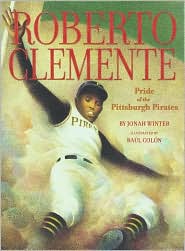
Roberto Clemente by Jonah Winter: Book CoverThere are many horrifying statistics about the achievement gap that exists in American schools and we thought that we may have a setting at Project Coach that enables us to make a small (but important) dent in that gap.  After much deliberation and a step in the right direction during this past fall semester, we decided that launching a small pilot program focusing on developing stronger literacy skills through sports-themed children’s book would be a worthy project to undertake.  This is an overview of our journey thus far.


Preparation
In the weeks leading up to the start of our spring season at Project Coach, Sam, Andy, and I sat down to hash out some of the ideas and goals of our Literacy Pilot Program.  We decided that our first order of business was to find appropriate books for the program.  Thanks to Will Bangs’ endless Pioneer Valley connections, we got put in touch with “Reader to Reader”, a unique organization that supplies needy children, schools, and clubs with age-appropriate reading material. (www.readertoreader.org) This sounded like the perfect fit.  Will and I made the trek over to Amherst to see what the organization had in store for our program’s idea.  As you will see from the video below, though, our hopes fell a bit short. (This was in no part due to the failure of the “Reader to Reader” organization.  In fact, “Reader to Reader” is too successful.  The minute they get most children or sports books, they fly off their shelves.)


We had to come up with a back-up plan.  At first, we searched on book sites for some possible books to purchase. Recognizing that a more frugal method was surely available, we eventually signed off the Internet and decided to peruse the Smith College Campus School’s library.  It was there that we hit the proverbial gold mine.  We found multiple books on sports heroes of the past, and while we had hoped to find some more current stars in the mix, we could not argue with our final collection (or its price).  (Which reminds me… I don’t think we ever properly checked those books out of the library.  So if Nancy Brady is reading this blog, I apologize for the five to six books that may be missing from your non-fiction sports section.)


At the end of a one-hour brainstorming session, we had come up with an ambitious program that sought to tear through six books in six weeks with all six teams in our third and fourth grade groups at Gerena Gym.  


First Day
The plan was rather straightforward.  For each day of the two-day program in the first week I would meet with all six teams for 10-minute classes.  During those sessions, the coaches would observe and help me run the lesson.  The second week would see the bulk of the responsibility turned over to the coaches with my help, and by the third week, solely the coaches would run the lesson.  It was an ambitious plan, but one to which we were quite committed as we set off on our first day.


The topic for the first day was a no-brainer.  Of the five or six books that we illegally jacked from the SCCS Library, one of them told the amazing and tragic story of Roberto Clemente.  Beyond the obvious connection of Clemente’s Hispanic roots to many of our players, there was an even more immediate connection- the field that Project Coach runs its Fall Session on is named “Roberto Clemente Park”.  We had a sneaky suspicion that many of our players were oblivious to the story of Roberto Clemente, and if their community felt as though a park in their backyard should be named after the man, then we felt they should most definitely know the story.


Our ambitious plan was set into motion on March 16th, and almost right away, we recognized that we might need to pull in the reigns a bit.  For one, there was no way that we were going to be able to see all six teams in a one-hour block.  We either had to cut our lesson short or we had to revamp the logistics of the situation.  We didn’t want to water down a curriculum that we thought was so important, so we decided to tinker with the logistics.  We went back to the drawing board.


There were definitely a few obstacles that we needed to overcome from.  For one, this is a sports program, and when the kids come here, they are expecting to play sports, not read books.  I needed to find fun and engaging ways to keep them interested and invested.  Secondly, some of the teams would be coming right from a gym filled with movement to a small space where they were going to be expected to sit and listen to someone read for a few minutes at a time.  Not an easy transition, even for the most mature of the lot.  And finally, the population of students with which we were working varied greatly in reading and comprehension skills.  Because most of our teams are not separated by grade/school, there is a wide spectrum of reading ability.  While the fact that I read the book to them no doubt helps to clear some of that obstacle, there is still a certain difficulty in developing engaging lessons with this present in the room.


Even with all of those logistical and pedagogical problems, the first unit was completed on time (all six teams met with me twice in just over two weeks) and was a great success for a first-time program.  We went into this unit with the baseline that if every kid could leave the unit simply knowing who Roberto Clemente was then we would have succeeded.  But at the conclusion of the unit, there seemed to be a greater takeaway.  For one, students on certain teams discussed not only Roberto Clemente, but also other historical figures and their importance like George Washington, Abraham Lincoln, and Martin Luther King.  And more importantly, they discussed and analyzed why our communities thought it was a good idea to name buildings that are visible to the public after such people. 


The ideal culmination of this first unit is captured best by a conversation between Coach Francesca and two of her players.  In devising this unit, I would have been hard pressed to wish for a better ending.  It went something like this:
    The players on Coach Francesca’s team are a bit wound up and are giggling a lot as they transition from reading the book to the next quick activity.  She grabs their attention with a strong clap and a great coaching voice.  Then she begins…
    Coach Francesca: So let’s try and answer the question that Coach Greg asked us.  Why would the people in our neighborhood think it’s a good idea to name this park after Roberto Clemente?
    William: Well, he was a really good person who helped a lot of people out.
    Coach Francesca: So do all nice people get parks named after them?
    William: I don’t think so.  (He pauses for a second.) Well, Roberto Clemente was also really famous… because he played baseball and everything.  And baseball players are usually really famous.  So he helped a lot of people and he was famous.  It’s sort of like Martin Luther King.
    Coach Francesca: I agree with that.  (Coach Francesca turns to another player on her team, Mildred.) But do you think that’s it, Mildred? Just a good person and a good baseball player?
    Mildred: I don’t know.  Those are two good things.
    Coach Francesca: You’re right they are.  But why Roberto Clemente?  Aren’t there other famous baseball players that were nice and helped people too?
    Mildred:  Probably…
    William: Yeah but he was flying all over the world.  He was going to Puerto Rico and South America. 
    Mildred: Yeah.  I don’t think everyone does that.
    Coach Francesca: Ok.  So he was going to Puerto Rico because that’s where he was from.  He was Puerto Rican.  Remember the soup cans he used to hit?  Do you know anyone in Springfield from Puerto Rico?
    Mildred: Yeah!  My mom is and so are tons of my friends.
    William: Almost everyone in Springfield is.
    Coach Francesca: Well, not everyone.
    William: Yeah, I know.  But a lot.
    Coach Francesca: So do you think that might have something to do with why they chose Roberto Clemente?
    Mildred: Yeah that’s probably the main reason. 
    William: Yeah I think so, too.  (tilts his head back) Puerto Ricoooo baby!
Below, you can see some of the work that the students produced from this lesson. 
Stay tuned for updates on the status of our next unit, which will have our players discussing gender roles in sports and society through the story of the famous Jackie Mitchell.


By Greg Rosnick, 2009-10 Project Coach Graduate Fellow

Tuesday, May 11, 2010

PC Community Sports Day 1 - Mother Nature 0


Resilience: noun: The ability to recover quickly from illness, change, or misfortune; buoyancy.


This term perfectly summarizes Project Coach on Tuesday.


The sun shown down brightly as the red shirts and coaches walked onto the Roberto Clemente field in Springfield, arms full of sports balls, cones, rope, bats, and a net. All this equipment was in preparation for Project Coach’s 2nd annual North End Community Sports Day, full of various sports games from volleyball and basketball, to kickball and tug-o-war for the kids in the community.


Sounds of kids laughter and gleeful screaming filled the air as I walked around the field viewing the different activities. Western New England College was also adding to this great atmosphere, leading the volleyball and t-ball stations, thanks to an array of college players and long-time PC supporter Charles Drago. It was so great to have some volunteers from the community showing their support for Project Coach. Red shirts were even getting competitive as they jumped into the games. Excitement was also exuding from the teenage coaches, especially at my personal favorite sport station: tug-o-war! At one point, there were about 15 kids on one end of the rope with 4 male coaches (all very strong). As a spectator, I was convinced all the kids would go flying, however, after a minute or so of tugging, the “kids team” tugged that rope right out of the their coaches’’ hands! What a great victory!


It was so great to scan the green field and see the kids, teenagers, and grad students all playing together with smiles spreading across each face. Sportsmanship and teamwork were also very evident at each station, as team members cheered each other on and high-fives were exchanged between friendly competitors.


However, Mother Nature had other plans for the rest of the day. A dark, looming, cloud floated its way above the field and a major gust of wind swept through, forcing everybody to run for safety indoors. Adults’ faces changed from happy and satisfied to worry and frantic. There were so many children to be accounted for and to fit into the indoor gyms. There was also the question of what activities to use for the kids in the remaining half hour of the day.


Thankfully, Project Coach has taught its coaches resilience and the importance of being flexible and creative when the original plans go awry. This was clear when the coaches immediately organized a bunch of scrimmages for the kids. Different colored sports pennies began appearing on the kids as teams were made and the basketball games began. As quickly as the kids had stopped the outside games and dispersed into the gym, the excitement and high energy level returned. The coaches were immediately on the sidelines coaching their teams to victory. This turn around from having about 70 young kids running around outside to organizing them into teams and starting basketball games indoors was simply amazing; all the children were quickly accounted for, no one was standing around wondering what to do next, and the coaches and red shirts mobilized quicker than lightning to decide what activity they would begin with this unexpected change in plans. The initiative the teenagers took to plan and mobilize their young athletes into new games demonstrated their resilience to any unexpected change in plans, like the change in weather provided that day.


It is because of the Project Coach red shirts and coaches resilience that made this day an incredible success. Not only was the camaraderie seen on the outside field inspiring, but as equally, if not more, inspiring was realizing that nothing could stand in the way of red shirts and coaches making this day the successful and fun for the kids.


Article and photos by Marie Wallace

Monday, April 19, 2010

From Slam Dunks to "A's"


How does an after-school program help its kids succeed not only on the court, but also off the court and in their classrooms? Project Coach has brought in Mike Dean to help make that success happen for their coaches.


Mike is Project Coach’s Academic Coach, a position given just this year. He has been with PC for 3 years and became involved after hearing about it from his rugby teammate, none other than Andy Wood. Mike and Andy both share an English accent and thus quickly bonded. Mike was very interested in PC and eagerly became involved and began working with team bonding at the start of the program for the teens. He is currently attending Berkshire and Holyoke Community Colleges studying physical education with a teacher preparation and a focus on movement sciences, and is hoping to transfer to Springfield College in the fall. He is minoring in health, coaching, and YMCA preparation. Needless to say, Project Coach and Mike are a good match!


When asked what Project Coach means to him, he responded, “From the outside, I really like the program. I like what it does for all three parties involved—the young kids, the teens, and the graduate students. The young kids come in, can play with older teens in their own community, and learn about sports as well as health. The teens broaden their horizons, learn how to work with younger kids, and become mentors. For the grad students, they can apply what they learn inside the classroom to the real world, and see how they, as graduate students, can create leaders out of teenagers”. On a more personal level, Mike, in interacting with the high schoolers himself, sees what aid he and the program can give to the students that they wouldn’t be receiving without Project Coach. “Project Coach gives them responsibility and enables them to learn how to take initiative”.


So what exactly does an Academic Coach do? Mike brings with him a white notebook that holds a sheet on every high school student along with a copy of the student’s most recent grades. On this sheet are the coach’s name, age, the student’s challenges, goals, and benefits to be received from completing these goals. All these categories are completed at his frequent and reoccurring meetings with each coach.


At these meetings, Mike pulls one coach aside at a time and begins a conversation. He shows them their sheet from their last session and they review it together, as Mike discusses with the teen what progress has been made and what goals may need to be revisited. Looking in on a meeting with Coach Stephen:


Mike asks, “How have your classes been going?”

Stephen answers with a smile, “I just got an 100 on my math quiz”.

Mike: “And how’d that feel?”

Stephen: “Great! I started dancing!”

Mike: “As you should, I got a good grade just recently on my psychology test and I shouted ‘Yeah’!”


Mike not only gives each student advice in how to improve academically, he also relates to the teens and shows them he truly cares about their success. He also does not give them answers, but he asks them how they think they can improve and helps them in developing their own concrete solutions.


Mike: What can you do to improve in class?

Ismael: Pay more attention in class.

Mike: How?

Ismael: Stop talking.

Mike: And how will you do that?

Ismael: Sit away from friends.

Mike: Give me specific location.

Ismael: In the front, closer to the teacher.

Mike: Perfect!


Mike’s effort to show the teens he cares is very apparent, and the kids react positively with smiles and sincere promises to reach the goals them and Mike develop.


So, how does Project Coach help its kids succeed off the court? It provides the students with a constant supporter who they know is continually watching their academics and checking in with them. Mike is a figure in their lives to keep pushing them forward and to remind them that they are capable of accomplishing any goal. Success happens when someone believes in you.


By Marie Wallace

Tuesday, April 13, 2010

Problem Solving...The Project Coach Way


Project Coach teaches its students about a myriad of different things, from sportsmanship to how to dribble, from study habits to how to talk to your teacher, and much more. The program covers a wide variety of skills, and one of the beauties of PC is that it teaches its students these skills and messages both explicitly and implicitly. While much of Project Coach is dedicated to tutoring, it is through the presence of engaged and intellectually-stimulated grad students, community members, and other adults who show the possibilities that come with education that much of the tutoring happens. Though high-schoolers run drills teaching the younger kids how to dribble the ball, it is through successful coaching that the high-school mentors show the middle and elementary school kids how to be a team player.

This past week at Project Coach, something unique happened that doesn't take place at every youth program. Andy, Sam, Don, and other adults of PC turned to the students and asked, what can we do for you? Instead of talking amongst themselves about what is best for the students, the PC staff decided to be open, honest, and candid with the high-schoolers about how to beef up the academic element of Project Coach.

Though many of the workbook activities and lessons learned on the field as a coach show the high-schoolers how deal with conflict and work as a team, it was this open discussion last week that taught each coach implicitly, through equal engagement with the PC staff, about problem solving.

Andy opened the discussion by talking about wanting to get grades up on the whole, and asked directly for input from the kids about how to make this happen. It was clear from the beginning that PC staffers were not paying lip service to the idea of input from the kids, but instead genuinely sought the guidance and expertise of the high-schoolers as coaches and participants in their own education. Sam addressed the group, all sitting together around round tables, "You know better than us what will work and what won't."

In small groups, the coaches tackled three specific questions: what about the academic side of PC isn't working? What would work for you as an individual? What can the program do on the whole? Each group of three to five kids had much to say on the topic; some comments like "teachers just want to teach and get it over with" showed some of the downsides of the educational system at large, while other suggestions for Project Coach, including a request for MCAS as well as SAT prep and the need for more tutoring time slots, showed definite ways in which PC could extend or rework its program in order to better serve the coaches.

In one small group, a high school sophomore said "If I don't go to college right after high school, I probably won't go," to which a Smith graduate student and PC staffer asked if he wanted to go to college; "of course" said the sophomore, and started talking about his teachers' lack of enthusiasm in the classroom. The Smith grad student took diligent notes and nodded her head vigorously; training to be a teacher herself, she was especially affected by the high-schoolers comments.

In terms of brainstorming, Francesca thought it might be a good idea for Project Coach to withhold the coaches' salaries when their grades did not meet certain qualifications. Cedric asked for more tutoring. Ziggy suggested, "Why don't you start a Project Coach school?"

The common theme among comments from high-schoolers was wanting more from Project Coach--everything that existed was already working well, but it was just a matter of getting more of it.

Another common theme was, as Gabriella said, "resources." Often tutoring sessions or different time slots that Project Coach could offer were not feasible because of limits in transportation and time conflicts with after-school jobs and family obligations.

After the discussion, there wasn't any simple or perfect resolution. Nevertheless, what struck me even more than the topic itself or the particular problem at hand was the way in which Project Coach created a venue for partnership between the coaches and the staff, and how the program demonstrated the process of problem solving: identify the problem, work together, think outside the box. Surely the coaches will take these implicitly learned lessons and messages to the field, as well as to their everyday life.

By Molly Ristuccia